Holy week & processions tour

Send us an enquiry
Send us an enquiry
Nom et prénom*
Adresse email*
Your message (then x in the "Je ne suis pas un robot"*
Save To Wish List

Adding item to wishlist requires an account

6088

Why choose Mayaexplor?

  • 30 years of experience
  • Local agency – no middleman prices
  • English speaking guides and drivers
  • Response in English within 24/48 hours

Feel free to contact us!

We specialize in tailor-made travel and will be happy to answer all your questions.

contact.mayaexplor@gmail.com

Fill out our travel request form

Duration: 14 days (in March or April, depending on the date of Easter)
Where ?  Guatemala
International flight: arrival in Guatemala City
International flight: departure from Guatemala City
General public
Customizable tour
This two-week itinerary offers a unique experience to explore Guatemala’s most beautiful locations while immersing yourself in the spectacular Holy Week festivities. You’ll discover colonial cities, colorful Maya villages, breathtaking landscapes, and archaeological treasures, all with private transfers and carefully planned logistics.

 
This tour is offered as a private trip but is also available as a guaranteed departure starting from just two travelers.

See all guaranteed departure dates:

View guaranteed departure dates


The tour
  • The awe-inspiring Good Friday processions in Quetzaltenango — far from the tourist crowds, in the heart of the Highlands
  • Visits to two UNESCO-listed Maya archaeological sites: Tikal and Quiriguá
  • Immersion in today’s living Maya world: walks through colorful villages around Lake Atitlán and in the Sierra de Los Cuchumatanes
  • A journey through Guatemala’s contrasts: the Highlands, the Lowlands, and the Caribbean coast

This 14-day customizable circuit includes all of Guatemala’s must-see highlights: the colonial city of Antigua, the majestic Lake Atitlán, the colorful Maya market of Chichicastenango, a boat journey down the Río Dulce, and the Caribbean coast (including a full day in Livingston and a relaxing afternoon at Playa Blanca). During your stay in the Highlands, you’ll witness the majestic Good Friday procession emerging from Quetzaltenango’s cathedral in the heart of its historic center. Holy Week celebrations on Guatemala’s Altiplano are recognized internationally for their scale and solemn beauty. The country’s Maya archaeological treasures are also in the spotlight — from the legendary Tikal and Quiriguá (both UNESCO World Heritage Sites) to the lesser-known but stunning Yaxhá, considered the best-restored Maya site in Guatemala after Tikal, and delightfully off the beaten path.

One day is left to your choice: a hike to observe an active volcano, or a visit to a coffee plantation and the small Postclassic Maya site of Iximché.

Possible extensions

  • The natural pools of Semuc Champey (returning to the capital by land from the Tikal region)
  • Optional extension: Relax at the Pacific coast at the end of your journey — Monterrico Nature Reserve
  • Belize (a short “incursion” of a few days from the Tikal area, round trip)

(see all our extensions)

What our travelers say about this tour
  • We’re now back in France after a trip we truly loved, and we really want to thank the whole team—and especially you. We feel as though we stayed much longer than we actually did; we saw and experienced so many wonderful things! […] Special thanks to Thierry for helping us during our unexpected ten-hour detour after the road between Flores and Cobán collapsed… a glimpse into the daily reality of such an extraordinary country!   

    All the hotels were perfect for us—[…] the Casa de Don David in El Remate, with its beautiful garden, was simply unforgettable.

    Thank you to Elda, so lovely and full of insight; to Manuel for his kindness and explanations; and to Juan Carlos, just as wonderful, with his impressive French (which he never studied!) and his great gestures to make himself understood.

    And thank you to you for crafting this whole trip, for your guidance, and for the flawless organization. Thanks again—we loved every minute of it, were amazed at every turn, and the memories will stay with us forever.  ,   

    Benjamin S.
    Couple
Itinerary overview
Day-by-day itinerary

Most of our tours begin, after your arrival at Guatemala City Airport, with a short transfer to Antigua and a first overnight stay in this welcoming colonial town, followed by a guided visit the next day and a second night in the same hotel.

Antigua is located just one hour from the international airport. According to travelers, it’s the ideal place to relax for two nights after a long flight — a quiet setting to recover from jet lag, exchange currency, and start getting your bearings.      

Day 1Arrival in Guatemala (Palm Sunday)

Your itinerary will be adjusted if your arrival does not fall on Palm Sunday to align with Chichicastenango market days (Thursday and Sunday) and Good Friday processions.

Accommodation: Hotel (Antigua – 1st night)   


Upon arrival at Guatemala City Airport, you will be welcomed and transferred to Antigua. Once the center of Spanish power until 1773, Antigua is beautifully set in a valley framed by three majestic volcanoes of the Sierra Madre: the active Fuego (3,763 m / 12,350 ft), Acatenango (3,976 m / 13,045 ft), and Agua (3,760 m / 12,340 ft). Its cobbled streets and colorful colonial houses open onto breathtaking views of the surrounding peaks. At around 1,500 m (4,900 ft), the climate is mild and pleasant year-round, still within Guatemala’s tropical zone.
Overnight stay in the historic center of Antigua (two nights total).

Day 2Colonial city of Antigua

Meals included: Breakfast
Accommodation: Hotel (Antigua – 2nd night)     


Nestled in a tropical valley framed by the Agua, Fuego, and Acatenango volcanoes, Antigua is among the most stunning colonial cities in the Americas.
A genuine Baroque architectural gem, it has been declared both a National Monument and a Monument of the Americas, and it proudly features on UNESCO’s World Heritage list.    Founded in the 16th century by the Spanish, Antigua endured numerous earthquakes over the centuries—a testament to the living, dynamic nature so revered by the ancient Maya. In 1776, the Spanish government moved the capital to present-day Guatemala City, leaving Antigua beautifully frozen in time. Since then, it has remained a well-preserved colonial city, full of atmospheric ruins and charming gardens.
The city is best explored on foot. Most landmarks are within the historic center: La Merced Church, the Cathedral, the Central Plaza, the Capuchinas and Santa Clara convents, and Parque de la Unión.
Second night in Antigua.

Day 3Pacaya Volcano Guided Hike or Coffee Plantation & Iximché Archaeological Site

Meals included: Breakfast
Accomodation: Hotel (Panajachel)


Option 1 – Guided hike in Pacaya Volcano National Park (active volcano)

A guided hike led by a local guide

Moderate difficulty
This hike is suitable for active travelers used to walking on forest trails. Elevation gain: +350 m (490 ft) / −350 m (490 ft), for about 3 h 30 of hiking in total. (Optional horseback assistance available.)


After transferring to Pacaya Volcano National Park, your guide will lead you from the visitor center to the base across dramatic black lava fields.
On a clear day, enjoy breathtaking views of Pacaya (2,552 m / 8,370 ft) and other volcanoes in the chain, including the impressive, highly active Fuego.
Depending on volcanic activity, you might see glowing lava flows. Pacaya is among Central America’s most active—and accessible—volcanoes.
In the afternoon, travel along the Pan-American Highway through the highlands to Panajachel, a peaceful lakeside village on Lake Atitlán (1,500 m / 4,900 ft).
Overnight in Panajachel.

2) Coffee Plantation & Iximché Archaeological Site

Visits: Self-guided

Just outside Antigua, in the village of Jocotenango, visit its charming colonial church and the La Azotea Coffee Plantation and Museum.
Wander through the main house to learn about the history and techniques of coffee cultivation and processing.
Within the same complex, explore Casa Kojom, a captivating Maya music museum showcasing both pre-Columbian and contemporary traditions.

On the way to Lake Atitlán, make a short detour to visit the Iximché archaeological site. This postclassic Kaqchikel Maya city, active from around 1470 to 1527, was also the first temporary Spanish settlement in the highlands. Declared a National Monument in the 1960s, it features four plazas, several pyramidal temples, a residential area, and two ball courts. Fortified by the Maya, Iximché was the second most important city in the highlands after Qumarkaj, the K’iche’ capital. Today, the site remains sacred for local Maya, and you may witness religious ceremonies with distinctly pre-Hispanic characteristics, including offerings to the sun, Mother Earth, flowers, and incense.
In the afternoon, travel along the Pan-American Highway through the highlands to Panajachel, a peaceful lakeside village on Lake Atitlán (1,500 m / 4,900 ft).

Overnight stay in Panajachel, a peaceful village on the shores of Lake Atitlán (1 500 m / 4 900 ft).

Day 4Lake Atitlán: Maya villages of Santiago and San Juan

Included meals: breakfast at the hotel and dinner with a Maya family.
Accommodation: Homestay (San Juan La Laguna)


Lake Atitlán is considered one of the most beautiful lakes in the world, as writer Aldous Huxley once said. Set at 1 500 m (4 900 ft) in the tropical zone, it lies within an ancient caldera surrounded by three towering volcanoes of over 3 000 m (9 840 ft).

A 30-minute boat ride from north to south takes you between the dormant volcanoes to a quiet bay where local fishermen start their work at dawn.

In Santiago Atitlán, you’ll admire the intricate, colorful clothing of the Tz’utujil Maya. Women wear richly embroidered huipiles and long red headwraps known as tocoyales, while men sport white embroidered pants decorated with colorful birds. You’ll also visit Maximón, a contemporary Maya deity venerated in a small chapel maintained by his brotherhood. The rituals—filled with flowers, incense, candles, and offerings of alcohol—are a striking mix of ancient and modern devotion.

Continue by boat to San Juan La Laguna, one of the most charming villages on the lake. Many local women’s cooperatives preserve ancestral cotton-dyeing knowledge using natural plants. You’ll enjoy dinner with a Maya family, who will host you overnight through a local ecotourism association.

Overnight with the host family.

Day 5Lake Atitlán: Maya Villages of San Antonio & Santa Catarina Palopó

Included meals: breakfast with your host family
Accommodation : Hotel (Quetzaltenango).


After breakfast with your hosts, cross the lake from south to north to Panajachel and meet your driver. Travel along a scenic route to discover the northeast shore of Lake Atitlán and its Kaqchikel Maya villages: San Antonio Palopó: Known for terraced agriculture. Santa Catarina Palopó: Observe traditional costumes—women wear turquoise huipiles, men short embroidered pants.

In the afternoon, transfer across the western highlands along the Pan-American Highway toward Quetzaltenango (2,300 m / 7,545 ft). The city sits in a highland valley at the foot of Santa María Volcano (3,770 m / 12,370 ft).

Overnight in the historic center of the city, known for its elegant neoclassical architecture.

Day 6Good Friday Procession in Quetzaltenango (“Señor Sepultado de la Santa Iglesia Catedral”)

Meals included: Breakfast
Accommodation: Hotel (Huehuetenango)


Quetzaltenango, often called Xela by locals, is Guatemala’s second-largest city with about 175,000 inhabitants. Founded in 1524 during the Spanish Conquest, just after their last major battles with the Highland Maya, the city sits at around 2,300 m / 7,545 ft, surrounded by mountains and high volcanoes, including Santa María Volcano (3,770 m / 12,370 ft). Its historic center retains the charm of a provincial city, with an elegant central square framed by colonial cathedral facades (1524), neoclassical columned buildings, and the “Pasaje Enrique” shopping arcade, built in 1900 in the style of major European capitals by an Italian architect. Xela still preserves a strong Maya presence, and locals continue to use the first two syllables of its original Maya name: Xelajú Noj. Xela (pour Xelaju Noj).

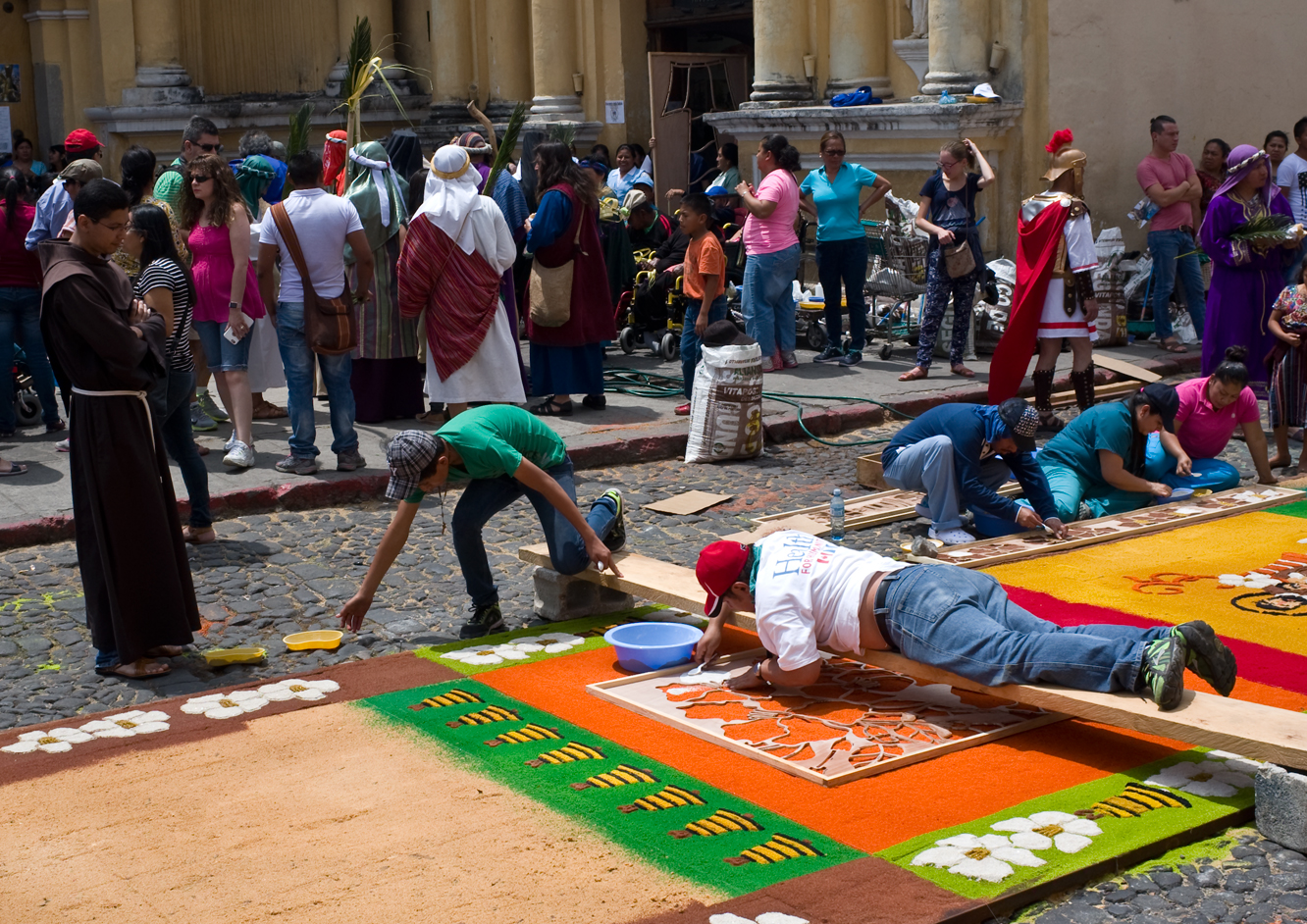
Guatemala’s Easter processions are world-famous. In 2019, over 160,000 tourists attended these events. The colonial settings, lavish garments of the carriers, the intricate floats, and their impressive scale make these among the most striking displays of faith. While Antigua and Guatemala City are the most famous sites, the streets can become completely crowded and even difficult to navigate. To offer a more authentic experience, you’ll witness a spectacular procession in Quetzaltenango, off the main tourist routes. Hundreds of carriers participate, just like in Antigua, but in a calm environment that preserves the tradition. The local Maya population plays a central role: women wear ceremonial attire reserved for major celebrations, resulting in a vibrant festival of color.

In the mid-afternoon, transfer by vehicle to Huehuetenango, at the foot of the Sierra de los Cuchumatanes.

Overnight in Huehuetenango.

Day 7Sierra de los Cuchumatanes & Maya Village of Todos Santos

Meals included: Breakfast
Accommodation: hotel (Chichicastenango).


Drive to the high plateau of the Cuchumatanes. At an altitude of 3,300 m / 10,827 ft, a viewpoint offers clear vistas of the volcanic chain, including Tacaná, Tajumulco (4,222 m / 13,845 ft – the highest volcano in Central America), Santa María, and Atitlán. The range is karstic, rising between 1,800 m and 3,900 m due to tectonic plate movements, resulting in a wide variety of vegetation. It is the highest non-volcanic mountain range in Central America, and some historians suggest this region is where the Maya language originated around 4,600 years ago. The Sierra de los Cuchumatanes features landscapes unlike anywhere else in Guatemala—high plains dotted with giant agaves and pine trees.

As Guatemalan Nobel laureate Miguel Ángel Asturias described:

 “It is the first land the navigator discovers from the South Sea. He gazes in awe. It is the earthly cloud where corn is born. The first grain of corn on earth. The pink puma takes refuge in its hills before time descends from the sky. Freedom of the first pine, dark green of the night, lunar, followed by another pine, then another, and another. Pines and cypresses go together up the hills, extending branches to help each other across ravines; they form groups, spread across plateaus, cluster in hollows, separate in gorges, and climb in single file toward the peaks to admire, from the highest of the Green Andes, under a vivid indigo sky, the smoke-crowned volcanoes, the silvery rivers, and shining nickel lakes.”

 Miguel Angel Asturias : Maladrón


Descend to the village of Todos Santos (2,500 m / 8,200 ft) via a scenic route. The Mam Maya of this region wear richly hand-embroidered traditional clothing: men in embroidered shirts and striped pants in red and white; women in purple and red blouses with dark blue skirts. Market day in Todos Santos is Saturday. Agriculture (coffee, potatoes, corn) and sheep raising are the main economic activities.


In the afternoon, vehicle transfer to Chichicastenango (about 2 hours). Upon arrival, you’ll have time to witness the fascinating preparations for the town’s famous market.

Overnight stay in the village of Livingston.

Day 8Maya market and village of Chichicastenango

Meals included: Breakfast
Accommodation: Hotel (Flores)
Included: Domestic flight Guatemala City – Flores


Chichicastenango is rich in traditions. It is also where the Popol Vuh, one of the rare pre-Columbian texts considered the “Mayan Bible,” was found.

Today, the town is best known for its incredibly colorful markets and fascinating scenes of religious syncretism that unfold daily in and around its 16th-century colonial church. The church was built on the foundations of an ancient Maya temple; its stairway has 18 steps, one for each month of the Maya solar calendar.

As you wander through the narrow streets, you’ll discover one of the most famous handicraft markets in the region — a true explosion of colors! You’ll find wooden carvings, silver jewelry, textiles, fruits, and the traditional incense known as copal. Among the finest local crafts are the embroidered huipils (blouses worn by Maya women) and the beautifully carved masks used in traditional dances.

Just a ten-minute walk from the center lies the town’s colorful cemetery, where you may witness Maya families performing ancestral ceremonies to honor their ancestors. Nearby, the Pascual Abaj hill serves as a sacred site for rituals that blend ancient Maya beliefs with Catholic elements.

In the mid-afternoon, transfer by road along the Pan-American Highway to Guatemala City Airport for your late-afternoon flight to Flores.

Overnight on the charming island of Flores, nestled on Lake Petén Itzá (the third-largest lake in the country, at 35 sq mi / 90 km²). With its cobblestone streets, colorful houses, and lakefront cafés, Flores has the feel of a cheerful holiday village. The sunsets over the lake are often spectacular.     2 2  

Day 9Archaeological site and Tikal National Park

Meals included: Breakfast
Accommodation: Hotel (El Remate – 1st night)   
Guided visit in English included: Archaeological site and Tikal National Park


To reach the entrance of the archaeological site, you’ll cross the southern part of the National Park—a beautiful opportunity to observe wildlife and the tropical forest.
Guided visit of Tikal with a specialist English-speaking guide. Tikal National Park is one of the rare UNESCO World Heritage Sites listed for both its natural and cultural value, thanks to its extraordinary biodiversity and its major archaeological importance. Once a powerful ceremonial center, occupied from the 9th century BCE to the 9th century CE, it lies within a vast 576 km² (222 mi²) tropical forest reserve
in Guatemala, and arguably in the entire Maya world. During the pre-Columbian era, this immense metropolis exerted political, economic, and cultural influence as far as the Mexican highlands. Your guide will help you discover the site’s remarkable flora and fauna: several monkey species, anteaters, over 300 species of birds, as well as deer and coatis. The reserve’s vegetation is equally diverse, with more than 200 tree species.

In the mid-afternoon, a short transfer will take you to the peaceful village of El Remate, located on the shores of the beautiful Lake Petén Itzá.
Overnight in El Remate (two nights total).

Day 10 Archaeological sites of Yaxhá and Topoxté

Meals included: Breakfast
Accommodation: Hotel (El Remate – 2nd night)     
Guided visit in English included: Archaeological site and Yaxhá National Park


Morning transfer by unpaved road to the archaeological site of Yaxhá for a guided visit. Although lesser known, this magnificent site is the best restored in Guatemala after Tikal. From the main pyramid, you’ll enjoy a panoramic view of the surrounding forest and the shimmering Lake Yaxhá. Off the beaten track, a short boat ride across the lake will take you to the small and picturesque site of Topoxté, which remained occupied by the Maya until the 16th century.     

Return to your hotel in the afternoon and second overnight stay in El Remate.

Day 11 Descent of the Río Dulce and visit of the San Felipe fortress

Meals included: Breakfast
Accommodation: Lodge (Livingston – 1st night)   


After breakfast, drive south through the Petén region to reach Guatemala’s Caribbean coast. Along the way, you’ll see numerous ceiba trees (silk-cotton trees)—the national tree of Guatemala and the sacred tree of the Maya. The Petén was one of the most important Maya population centers, and recent LIDAR studies have revealed that several million Maya inhabited these fragile lands for nearly 1,800 years.

From the village of Río Dulce, embark on a motorboat excursion along the tranquil river surrounded by dense tropical vegetation, heading toward the Caribbean village of Livingston.

The Río Dulce, Guatemala’s largest river and the gateway to the Caribbean Sea, connects to Lake Izabal—the country’s largest lake (590 km² / 228 sq mi).2Together, they form one of the most important hydrological systems of eastern Guatemala, draining rainwaters from the highlands to the Atlantic Ocean.

At the start of your boat trip, visit the charming San Felipe Fortress, built by the Spanish to protect their warehouses on the shores of Lake Izabal from pirates and privateers. Today, this picturesque fortress is one of the region’s postcard-perfect landmarks.

As you continue down the river, the scenery becomes spectacular: lush cliffs, tropical vegetation, mangroves, and bird islands once used as hideouts by pirates. The region’s rich wildlife includes monkeys, anteaters, toucans, coatis, iguanas, manatees, pelicans, egrets, and herons. Midway through the journey, stop at the Ak’ Tenamit community project, a local Maya Q’eqchi’ organization working to preserve the rainforest and traditional crafts. You’ll have the chance to meet artisans and learn about community-led conservation efforts.

Overnight in the Caribbean village of Livingston (two nights total).

Day 12Relaxing Day in Livingston

Meals included: Breakfast
Accommodation: Hotel (Livingston, 2nd night)


The population of this village, isolated from the rest of the country, is still primarily composed of Black Garifuna people, who live along the Atlantic coasts of Belize, Guatemala, Honduras, and Nicaragua. This unique culture emerged in the 17th century from the blending of African slaves and Indigenous Caribs. In 2001, Garifuna dance, music, religion, and language were proclaimed a Masterpiece of the Oral and Intangible Heritage of Humanity by UNESCO.
Your boatman will meet you at your hotel’s dock for a lovely excursion. Following the northern coast by boat, you’ll reach the natural site of Siete Altares (“Seven Altars”), a series of beautiful freshwater waterfalls in the tropical forest (swimming possible—water shoes or sandals recommended). Continue to Playa Blanca, a white-sand beach lined with coconut palms, hammocks, lounge chairs, and pelicans.
Return to Livingston by boat. Free afternoon to enjoy the village’s Caribbean vibe.
Suggestion: Try a coco loco (a coconut filled with rum) at a café terrace, or sample the local specialty tapado, a delicious seafood and coconut milk stew.
Second night in Livingston.


Day 13Archaeological site of Quirigua

Meals included: Breakfast
Accommodation: Hotel (Guatemala City)
Self-guided visit


Boat transfer from Livingston to Puerto Barrios, the former major Atlantic port of the country, following the coastline. Then continue by road toward Guatemala City. Along the way, you’ll cross a wide variety of landscapes—from the lush tropical Caribbean region to drier zones filled with cactus and calabash trees as you approach the capital.
Stop at Quiriguá for a self-guided visit of the archaeological site, famous for its impressive stelae—the tallest yet discovered in the Maya world. The site lies in a pocket of tropical forest surrounded by vast banana plantations. You’ll likely spot toucans, parrots, and other tropical birds, along with magnificent trees. During your passage through the plantation, a short stop will allow you to observe the banana cultivation system—an industry that profoundly shaped the political, economic, and social landscape of Guatemala throughout the 20th century.

Overnight in a hotel located in Zone 10 of Guatemala City.


Day 14Return flight

Meals included: Breakfast


Short transfer to Guatemala City Airport for your international departure (check-in three hours before the flight). Depending on your flight schedule, you may visit the city’s main museums (upon request). In that case, we recommend choosing flights departing in the mid- or late afternoon.

This tour is available as a private trip, but it is also offered as a guaranteed departure starting from just 2 participants.

View guaranteed departure dates

The budget

Cost in US$, per person, based on double occupancy and number of participants:

in 2–3* hotels (category A) or 3–4* hotels (category B)

2 people
3 people
4 people
A
B
A
B
A
B
3025
3448
2426
2843
2126
2538

5 people
6 people
7 people
A
B
A
B
A
B
1976
2395
1970
2388
1869
2287

Single room supplement
Triple room discount
A
B
A
B
410
730
64
118

For full details of services, please contact us

Don’t hesitate to ask for customized programs and itineraries tailored to your wishes and constraints — we specialize in personalized travel throughout Guatemala and across the entire Maya world!

Price includes:

  • 13 nights in 2–3* or 3–4* hotels, double occupancy ;
  • American breakfasts ;
  • All private ground transfers and transportation with driver (Days 1, and 3–8 with a English-speaking driver*) ;
  • Domestic flight Flores – Guatemala City on Day 8 ;
  • Private boat transfers: Panajachel to Santiago Atitlán and San Juan La Laguna (Day 4); San Juan to Panajachel (Day 5); Río Dulce to Livingston (Day 11); excursions to Siete Altares and Playa Blanca (Day 12); Livingston to Puerto Barrios (Day 13) ;
  • Entrance fees to Pacaya Volcano National Park or the coffee plantation (depending on your chosen Day 3 activity) ;
  • A Spanish-speaking guide in Pacaya Volcano National Park if you choose this excursion on Day 3 ;
  • Entrance fees to the archaeological sites of Tikal (Day 9), Yaxhá (Day 10), and Quiriguá (Day 13) ;
  • Specialist English-speaking guides* at Tikal (Day 9) and Yaxhá–Topoxté (Day 10).

* English-speaking staff subject to availability at the time of booking.

Price does not include:

  • International flights ;
  • Guide services other than those specified in the program ;
  • Airport taxes ;
  • Travel insurance (cancellation/interruption, baggage loss, assistance) ;
  • Hotel surcharges during Christmas/New Year holidays and Easter week ;
  • Entrance fees to sites, museums, and reserves not listed under “Price includes” ;
  • Anything not specifically mentioned in “Price includes”.

Expenses on site:

  • Meals not listed above ;
  • Drinks and personal purchases ;
  • Tips ;
  • Entrance fees not included in the “Price includes” section.

Price adjustment:

Published prices apply outside the Christmas/New Year and Easter periods (hotel prices may increase during these times).

Payment schedule:

More than 35 days before departure: a 40% deposit is required at the time of booking. For bookings made less than 35 days before departure: full payment is required upon booking. The balance of the total trip cost must be paid no later than 35 days before departure.

On the Ground
Organization

Our Team :

  • A English-speaking driver from our team (subject to availability at the time of booking) ;
  • Experienced boatmen we’ve worked with for many years ;
  • Carefully selected guides for their field expertise and professionalism (experience, reliability, group management, and language skills) ;
  • Our office team, available for any questions or assistance during your trip.

Transportation :

  • Private ground transfers in air-conditioned vehicles ;
  • Private boat transfers on Lake Atitlán and along the Río Dulce River ;
  • One domestic flight between Guatemala City and Flores (Day 8).

Accommodation :
2–3* or 3–4* hotels depending on the selected category, in double rooms.

One night with a Maya host family on Day 4.

Triple rooms are available upon request.

Regardless of category, all accommodations are selected for their charm, comfort, and excellent location.

We encourage you to review the hotel selection we’ll send you — visiting the hotel websites will help you understand our choices and confirm the quality of accommodations. In terms of value, comfort, location, and character, they’re widely regarded as among the best in the country.

Please note: there is no official hotel star rating system in Guatemala. The number of stars indicated reflects a combination of our own evaluations, traveler feedback, and commonly accepted local standards.

Meals :

  • Breakfasts at the hotel (except Day 5, breakfast with your host family) ;
  • Dinner on Day 4 with the Maya host family in San Juan La Laguna (Lake Atitlán).

Money & currency :

In Guatemala
The local currency is the Guatemalan quetzal (GTQ).

Exchange rate (indicative): 1 US$ = 7.60 GTQ.

The US dollar is widely accepted throughout the country and is considered the reference currency. Euro exchange is very difficult. Small purchases are usually made in local currency. Visa credit cards are well accepted; MasterCard can sometimes be more complicated to use. ATMs are available in major cities, near banks, and in many gas stations and shopping centers.

Photos